
Building valuable integrations
This week I spent some time digging into our integration adoption. For a long time our most popular use case has been backlog estimation using Sprint Poker. We’ve learned a few things along the way:
- The use case makes all the difference. Is it essential?
- Integrations drive adoption, attachment, and upgrades. Is it valuable?
- Providing integrations takes considerable effort. Can we support it?
Where we go from here is important. Looking at our plans for the future, what new integrations might be essential to our product roadmap?
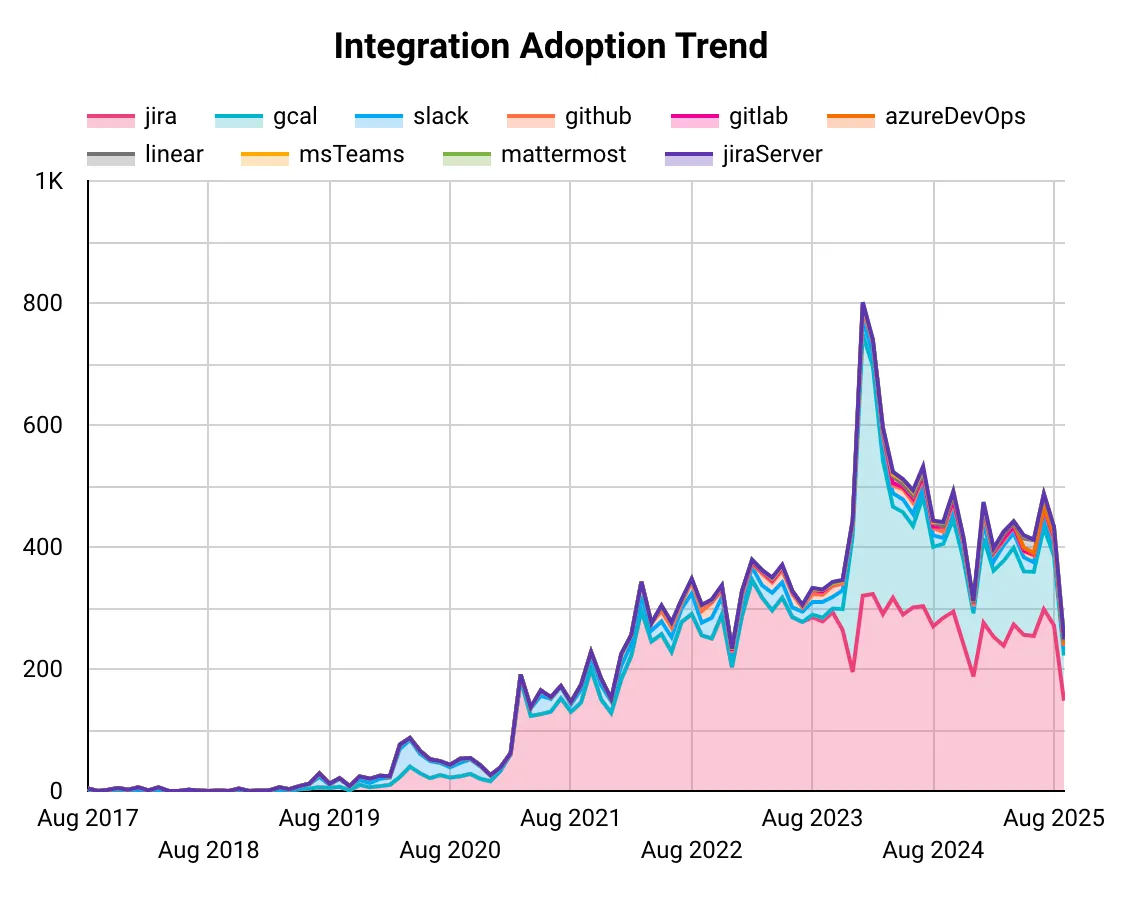
Usage by the numbers
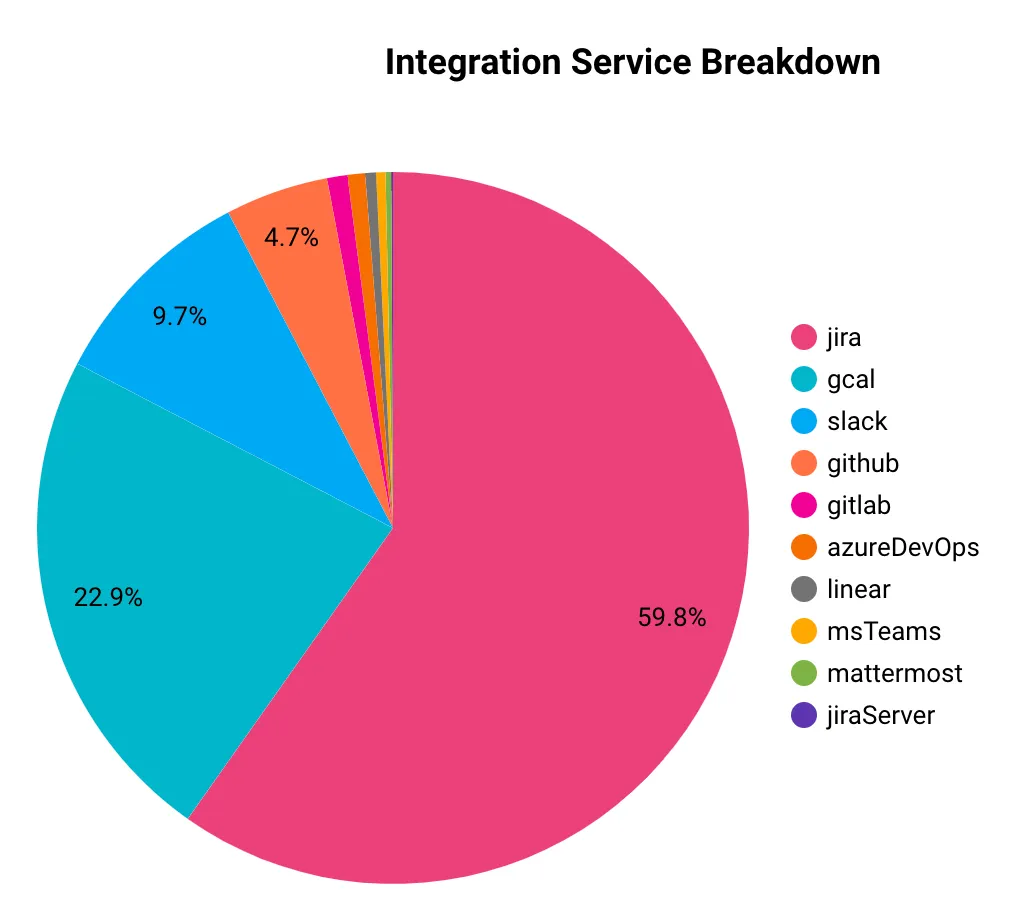
The use case makes all the difference in how popular an integration is:
- Backlog estimation (Jira, GitLab, GitHub, Linear, Azure DevOps) — integrating with the backlog is essential to Sprint Poker.
- Calendar (GCal) — this is our second most popular integration. Many folks live by their calendars.
- Chat notifications (Slack, Mattermost, Teams) — chat is useful, but we don’t think it’ll be essential until we support workflows that span chat, meetings, and knowledge management.
Trends on teams that use integrations:
- 34% of teams with 5+ members
- 23% of teams on the Enterprise tier
- 29% of teams on the Team tier
Supporting users
Supporting integrations is a continuous effort that keeps us in touch with our customers.
- They let us know when there are bugs or frictions. A portion of our development efforts goes into fixes, enhancements, and upgrades.
- Customers often ask us to add their new backlog management tool when they switch to one that we don’t currently support.
- Helping folks discover and set up integrations is an important part of our customer success efforts.
What’s next
We are building custom workflows on top of knowledge management. What integrations might be essential to supporting the following use cases?
- Theming customer support tickets or survey data
- Prioritizing sales or talent pipelines
- Moving insights from meetings to the team’s knowledge base
We’re also exploring MCP connections to enable AI-driven insights across tools and workflows.
The technology is here to connect all the things in powerful ways. The opportunity is in enabling teams to make sense of their data so they can do their best work and build strong relationships with each other and those they serve.
Originally published as Parabol Friday Ship #460